1. Introduction
Rwanda’s journey into artificial intelligence (AI) is not an afterthought: it is central to its vision for a knowledge-based economy. Over the last several years, the country has laid down strategic, regulatory, and infrastructure building blocks that are now maturing into a robust AI ecosystem. This article decodes how Rwanda is building that engine — from policy and capacity-building to funding and infrastructure.
2. Strategic Foundations: Policy, Vision, and National Commitment
National AI Policy & Strategic Pillars
- Rwanda’s National Artificial Intelligence Policy emphasizes four key pillars: skills development, infrastructure, governance, and collaboration. risa.gov.rw+1
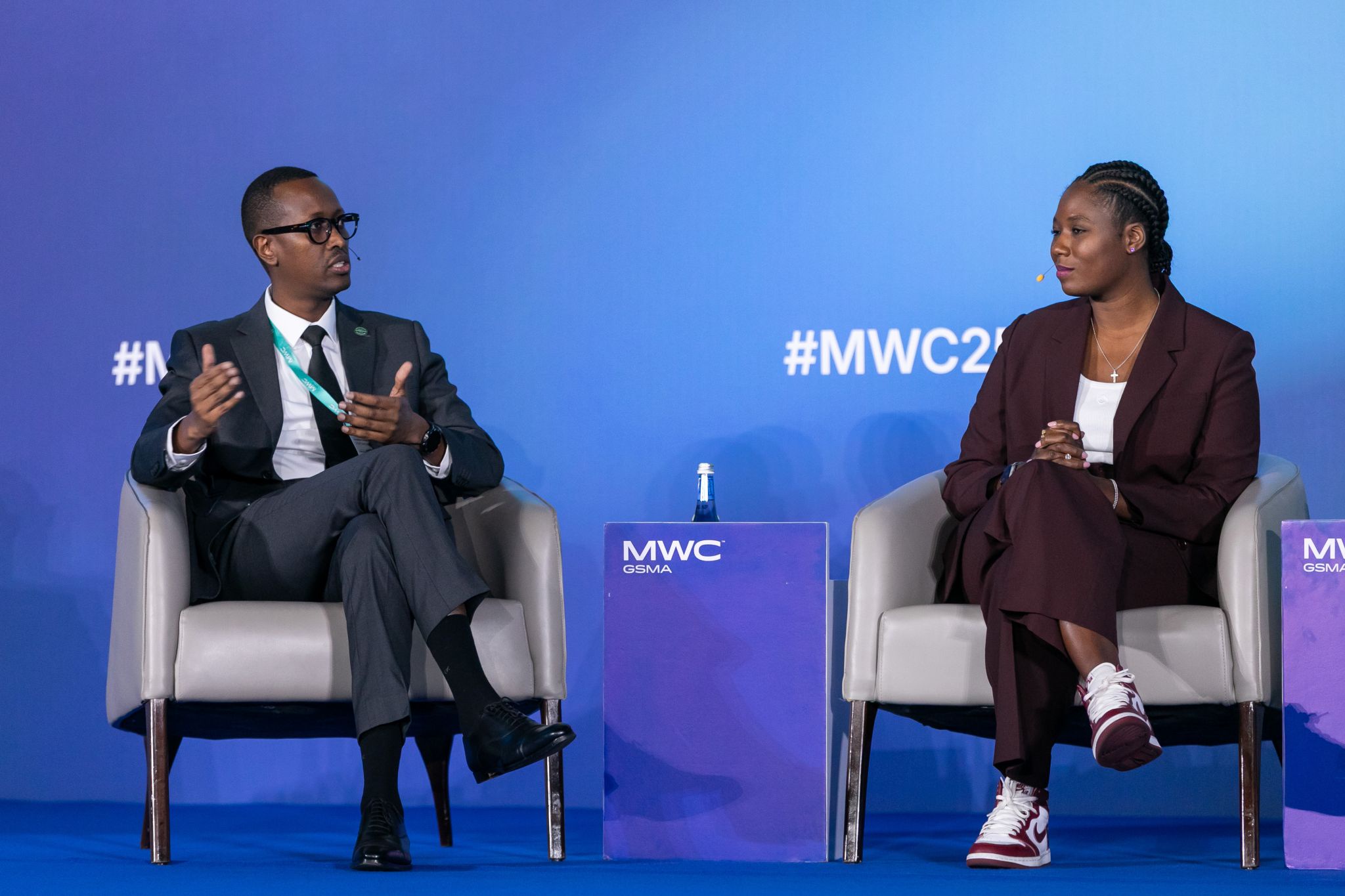
- At the Mobile World Congress (MWC) Kigali 2025, RISA’s CEO Antoine Sebera underscored that Rwanda aims to build an AI ecosystem that is trustworthy, inclusive, and sustainable. risa.gov.rw
- The policy also strongly focuses on ethical AI, including data privacy, fairness, and transparency. New Times+1
Digital Acceleration Project
- To accelerate digital transformation, Rwanda launched a Digital Acceleration Project (2022–2026) funded with Rwf 280 billion (~US$200 million). rwandainzimbabwe.gov.rw+1
- Key components include broadband expansion, digital literacy, and enabling smart devices for underserved citizens. rwandainzimbabwe.gov.rw
- Specific investments: ~US$33.5 million to extend high-speed broadband to government institutions, schools, hospitals, and public points. rwandainzimbabwe.gov.rw
- Another ~US$39.3 million is earmarked for upgrading the national digital ID system, improving authentication, e-signatures, and secure access. rwandainzimbabwe.gov.rw+1
3. Institutional Landscape: Who Is Driving AI in Rwanda
RISA — The Central Actor
- The Rwanda Information Society Authority (RISA) leads much of the coordination for digital transformation. Its mission includes increasing technology adoption, innovation, and ICT-based development. risa.staging.risa.rw
- RISA drives AI governance, regulatory design, and partnership frameworks.
Innovation Hubs and Research Centers
- The Centre for the Fourth Industrial Revolution (C4IR Rwanda) is critical: it hosts Rwanda’s first AI Scaling Hub. AI Reports Africa+2Tech In Africa+2
- In Q2 of 2024, the Digital Transformation Center Rwanda (DTC-RW) quarterly report shows that the Smart City Hub (in partnership with RISA and the ICT Chamber) is operational, launching innovation challenges in cities like Bugesera, Musanze, Kayonza, and Rubavu. digicenter.rw
- IndabaX Rwanda 2024: a two-day international AI & ML conference hosted locally, bringing together global and local experts (Google, IBM, YALE, EPFL) and launching three hackathons on Kinyarwanda language models, illegal crypto mining monitoring, and more. digicenter.rw
4. Financial Backing & Ecosystem Capital
Major Investments
- Rwanda secured US$17.5 million from the Bill & Melinda Gates Foundation to launch Africa’s first AI Scaling Hub in Kigali, hosted at C4IR Rwanda. AI Reports Africa+1
- This hub is not just for pilot projects — it’s a scaling vehicle for AI solutions in healthcare, agriculture, and education, especially those that can be deployed in low-resource settings. AI Reports Africa
AI Application Ambition
- The government aims to develop 50 AI applications within four years (from 2025) across sectors like healthcare, education, agriculture, finance, and public administration. allAfrica.com+2New Times+2
- These applications are more than theoretical — they are designed to solve real local problems, such as optimizing government operations, improving financial inclusion, and enhancing diagnostic capacity in health. New Times
Economic Impact
- The ICT sector in Rwanda grew by 19% in Q1 2025, making it the second-largest contributor to GDP growth in that quarter. KT PRESS
- According to the ICT Minister, AI could contribute up to 6% of Rwanda’s GDP in the near future, signifying both ambition and optimism. KT PRESS
5. Talent, Skills & Capacity Building
Human Capital Development
- The Ministry of ICT (MINICT) is investing in its Digital Talent Program, aiming to train 20,000 youth in two years. allAfrica.com
- The The Gym at University: an intensive software development program that aims to train 1,000 students per year until 2030. allAfrica.com
- Digital Literacy Program: jointly run with Big Win, targeting 100,000 teachers and students. New Times+1
- The “1 Million Coders” platform: open for Rwandans to learn coding skills (including data science) online. allAfrica.com
AI Community Building
- Local AI-ML conferences: IndabaX Rwanda (2024) brought in major international stakeholders and strengthened the domestic community. digicenter.rw
- Through these events and hubs, Rwandan students, researchers, and entrepreneurs are increasingly engaged in AI research and innovation.
6. Infrastructure & Digital Public Goods
Connectivity & Digital Access
- The Digital Acceleration Project (2022–2026) is expanding broadband to underserved areas. rwandainzimbabwe.gov.rw+1
- This includes connecting government offices at all administrative levels (central, district, cell) through a resilient GovNet network. rwandainzimbabwe.gov.rw
- Public Wi-Fi deployment in key commercial zones is also planned to drive demand for digital services. rwandainzimbabwe.gov.rw
Data Infrastructure
- Rwanda has approved a National Data Sharing Policy (2025) to facilitate secure data exchange across public institutions. risa.gov.rw
- This policy is crucial for building AI-ready datasets, allowing government agencies to share anonymized or non-sensitive data in a structured way. risa.gov.rw
Digital Public Infrastructure (DPI)
- Rwanda is building DPI that supports AI: for example, in the health sector, its National Health Intelligence Centre aggregates data to support analysis and decision-making. risa.gov.rw
- The DPI effort is guided by principles of trust, inclusion, and secure data governance. risa.gov.rw+1
7. Use Cases and Early AI Adoption
AI Scaling Hub Use Cases
The newly established AI Scaling Hub (funded by Gates Foundation) is focused on real-world applications:
- Healthcare: AI-driven demand forecasting for medical supplies (e.g., predicting which clinics will need which drugs when), ultrasound tools that help detect pregnancy complications in remote areas. AI Reports Africa+1
- Agriculture: Tools delivered via SMS/WhatsApp/voice to farmers, offering crop advice, early-warning of pests or disease, or climate adaptation strategies. AI Reports Africa
- Education: AI-based adaptive learning systems, automated grading, or personalized feedback to students, especially in low-resource or overcrowded classroom settings. AI Reports Africa
Government & Public Services
- The government’s plan to build 50 AI applications includes use across public administration: automation, predictive analytics, and more efficient service delivery. New Times
- Examples: enforcing construction regulations (detecting unauthorized constructions using AI) — the government aims to raise compliance from 25% to 65%. allAfrica.com
Ethical & Responsible AI
- Rwanda is proactively developing ethical guidelines for AI — fairness, data protection, and alignment with public good are central. New Times+1
- RISA stresses data sovereignty: AI projects should use local data where possible and involve local communities. risa.gov.rw
8. Challenges & Risks
While Rwanda’s AI ecosystem is growing quickly, there are real challenges:
- Data quality & readiness: For AI to work well, we need high-quality, interoperable datasets — integrating siloed government systems is nontrivial.
- Digital divide: Even with broadband roll-out, rural or marginalized communities may lag in access, limiting who benefits from AI.
- Skills gap: Training programs are scaling, but demand for high-level AI talent (data scientists, ML engineers) may outpace supply.
- Sustainability: Projects like the AI Scaling Hub need long-term funding and use cases that can be maintained locally.
- Ethical risk: As AI scales, so do risks of bias, misuse, and privacy violations — strong governance will be essential.
9. Outlook & Future Potential
- With the $17.5 million investment in the AI Scaling Hub, Rwanda is not just piloting — it is scaling AI innovation at continental scale. AI Reports Africa+1
- The ambition to build 50 AI tools across critical sectors suggests Rwanda is ready to operationalize AI in ways that affect citizens’ daily lives. allAfrica.com
- If the digital acceleration project meets its targets, Rwanda will have stronger infrastructure to support AI, especially in underserved areas.
- As more young people are trained in data science and AI, Rwanda could become a regional talent hub, exporting AI solutions and expertise.
- By prioritizing ethical AI, Rwanda is also positioning itself as a model for responsible technology development in Africa.
Comments
Loading comments…