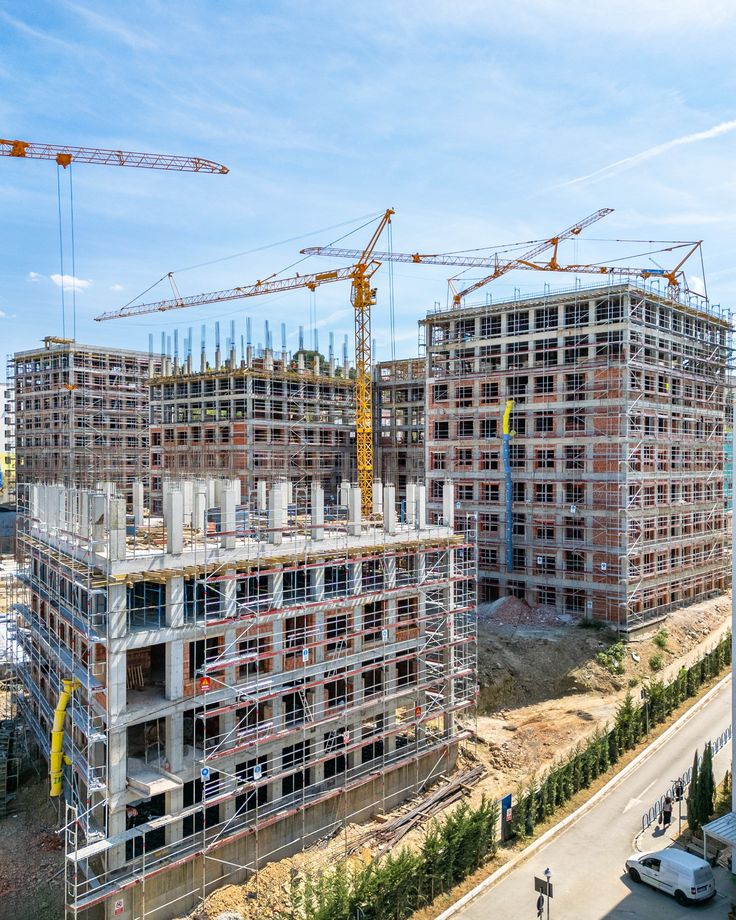
Launched alongside the 2025 National Urbanisation Policy, KUBAKA represents a major policy shift in how Rwanda plans, regulates, and manages urban development. This article unpacks what KUBAKA is, why it matters, and what early evidence suggests about its impact — in clear, citizen‑friendly terms.
Why Building Permit Reform Matters
Rwanda is urbanising fast. According to national projections, the share of Rwanda’s population living in urban areas has increased sharply over the past decade and is expected to exceed 50% by 2035, with Kigali and secondary cities driving much of this growth. Urban expansion brings opportunities — jobs, housing, investment — but also serious risks if growth is poorly planned.
Before recent reforms, the building permit process was often cited as a bottleneck. Applications involved manual steps, multiple institutions, and long waiting times. For households, this meant delays and extra costs. For government, it made enforcement of master plans and construction standards difficult.
The challenge was clear: how can Rwanda regulate rapid urban growth without slowing development?
What Is KUBAKA?
KUBAKA is Rwanda’s official online platform for managing building permit services, accessible through kubaka.gov.rw. It replaces earlier permit systems with a fully digital, end‑to‑end process.
Through KUBAKA, users can:
- Apply for building permits entirely online
- Upload architectural and engineering plans
- Track application status in real time
- Receive feedback and decisions digitally
- Access different permit categories (construction, extension, renovation, demolition, and change of use)
The platform is designed to serve citizens, professionals, and investors while ensuring compliance with zoning regulations and urban master plans.
KUBAKA and the 2025 National Urbanisation Policy
KUBAKA is not a standalone technical tool. It is a policy instrument under Rwanda’s revised National Urbanisation Policy (2025).
The policy is built around four pillars:
- Coordination – Aligning urban planning across institutions and levels of government
- Densification – Promoting efficient land use and compact cities
- Liveability – Improving access to housing, infrastructure, and services
- Economic Growth – Creating predictable environments for private investment
Digital tools like KUBAKA help turn these policy goals into practice by making planning rules visible, enforceable, and consistent.
What Has Changed Under KUBAKA?
Early implementation evidence points to several concrete improvements:
Faster processing
Official communications indicate that the upgraded KUBAKA system has reduced permit processing times by around 30%, with some procedures now completed in hours rather than days when documentation is complete.
Lower costs for applicants
By eliminating repeated physical visits and manual follow‑ups, applicants save on transport, time, and informal costs. For small developers and households, these savings are significant.
Greater transparency
Applicants can see where their application stands at each stage. This reduces uncertainty and limits discretionary decision‑making.
Better planning compliance
Automated checks against zoning rules and master plans improve consistency and help authorities detect non‑compliant developments earlier.
Why This Matters for Ordinary Citizens
For many Rwandans, building a house is the largest investment of a lifetime. Delays or unclear procedures can stall projects for months. KUBAKA changes this experience by:
- Making requirements clear upfront
- Reducing back‑and‑forth with authorities
- Giving applicants confidence that rules are applied fairly
In simple terms, KUBAKA reduces friction between citizens and the state — a core principle of modern digital governance.
Remaining Challenges
Despite progress, challenges remain:
- Digital access and literacy: Not all applicants are equally comfortable with online systems, particularly in secondary cities.
- Transition management: Some applications initiated under older systems require careful migration.
- Data and performance reporting: More publicly available statistics on approval times and volumes would strengthen accountability.
Addressing these issues will determine how inclusive and sustainable the reform becomes.
KUBAKA in a Broader Policy and Data Context
From a research perspective, KUBAKA sits at the intersection of urban policy, digital government, and data governance. Building permits generate high-value administrative data: location, land use, building type, investment value, and compliance status. When digitised and standardised, this data becomes a powerful planning tool.
Under KUBAKA, permit data can be aggregated to answer key policy questions such as:
- Which districts are experiencing the fastest construction growth?
- What types of buildings dominate new developments (residential vs commercial)?
- Are developments aligning with approved master plans and zoning rules?
International experience shows that cities using digital permit systems are better able to anticipate infrastructure needs, enforce safety standards, and reduce informal construction. KUBAKA positions Rwanda to move in this direction by treating permit data not just as paperwork, but as a strategic planning asset.
How Rwanda Compares Regionally
Within East Africa, Rwanda is among the few countries operating a fully integrated national building permit platform. In many neighbouring systems, permit applications still involve partial digitisation or city-by-city approaches. Rwanda’s nationwide rollout allows for:
- Consistent standards across districts
- Comparable urban development statistics
- Easier monitoring of national urbanisation targets
This consistency supports Rwanda’s Vision 2050 goal of developing well-planned secondary cities, reducing excessive pressure on Kigali while stimulating balanced regional growth.
Early Indicators Researchers Should Watch
As KUBAKA matures, several indicators will be critical for evaluating its real policy impact:
- Average permit approval time (days before and after digitisation)
- Number of permits issued per year, by district
- Share of rejected or revised applications, indicating planning compliance
- Construction sector growth, particularly small-scale residential projects
Publishing these indicators regularly would strengthen transparency and enable independent policy evaluation.
Policy Takeaways
KUBAKA illustrates how digital tools can strengthen policy implementation, not replace it. Its success depends on clear urban rules, institutional coordination, and continuous improvement.
If effectively scaled and monitored, KUBAKA can:
- Support orderly urban growth
- Improve trust in public institutions
- Encourage private investment in construction and housing
- Protect cities from unplanned and unsafe development
As Rwanda continues its journey toward Vision 2050, reforms like KUBAKA show how smart policy design and digital systems can work together to shape better cities.
Sources: Ministry of Infrastructure (MININFRA), kubaka.gov.rw, National Urbanisation Policy (2025), public government communications.
Comments
Loading comments…