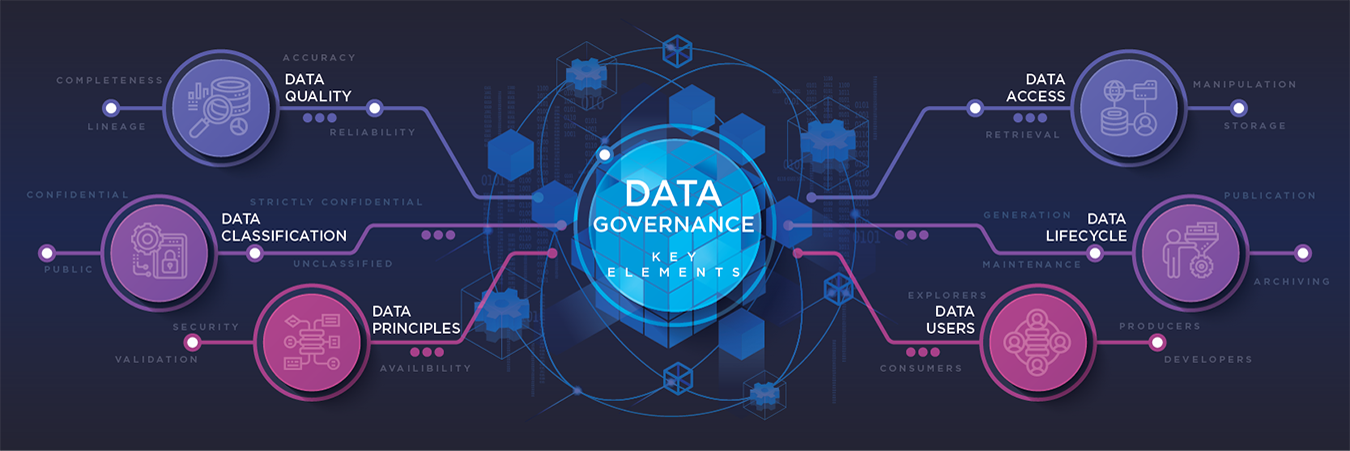
Imagine a Rwanda where government services just work , your ID is recognized across institutions, your land and business records are accurate, and you never have to submit the same document twice. Behind this seamless experience lies a new and ambitious story: the National Data Governance Framework, designed to transform government data from scattered records into a strategic national asset.
The Beginning: Why Data Needed a Story
For years, government institutions collected and stored vast amounts of data. But as the Framework observes, much of this data was trapped in fragmented silos, inconsistently recorded, and often inaccessible across departments. Citizens felt the impact every day: repeated paperwork, delayed approvals, and mistakes that slowed services.
The framework identifies these challenges explicitly:
“Variations in metadata, classification, and documentation reduce reliability and comparability across institutions… Many systems are not yet designed for seamless integration, creating duplication and inefficiencies.”
In other words, Rwanda had the raw material for progress — data — but lacked the story and structure to use it effectively.
The Vision: Data That Works for Citizens
Rwanda’s vision was ambitious. The framework states clearly:
“To build a coordinated, trusted, and citizen-centred national data ecosystem where government institutions securely manage and share data using common standards and interoperable systems.”
The story unfolds around a central idea: data belongs to the people, not the institutions. Government offices are merely caretakers, tasked with ensuring that your information is accurate, protected, and put to good use.
This vision is powered by the National Data Infrastructure, which connects people, businesses, and locations through unique identifiers. Think of it as giving every citizen, business, and place a “digital fingerprint” recognized everywhere in the public sector.
The result? Less confusion, faster services, and fewer mistakes — all directly impacting citizens’ daily lives.
The Heroes of the Story: Who Manages the Data?
Every story needs its heroes, and in this tale, the main characters are institutions and roles defined by the framework:
- NISR (National Institute of Statistics of Rwanda): The central custodian of data, responsible for setting standards, monitoring quality, and providing guidance across government.
- RISA (Rwanda Information Society Authority): The technical backbone, ensuring that the digital infrastructure is secure and that systems can communicate seamlessly.
- Government Institutions: Each appoints Chief Data Officers, Data Owners, Data Stewards, and Data Custodians to manage, oversee, and protect the data locally.
As the framework explains:
“The operating model is ultimately designed not only to strengthen institutional efficiency but also to improve citizen outcomes, reducing duplication in service delivery, protecting privacy, and enabling faster, more reliable access to government services.”
The Guiding Principles: The Moral Compass
Every great story has a moral, and here it comes in the form of ten guiding principles:
- Integrity – Data must be honest and unmanipulated.
- Accountability & Stewardship – Clear responsibility for managing data.
- Ethical and Citizen-Centred Use – Data serves people, not institutions.
- Transparency – Processes must be visible and understandable.
- Data Quality – Accuracy, completeness, timeliness, and consistency matter.
- Compliance – Following laws and international standards is mandatory.
- Security & Privacy – Citizens’ personal data is protected.
- Standardization & Interoperability – Systems must “speak the same language.”
- Sustainability & Innovation – Governance must evolve with technology like AI and big data.
- Value Creation – Data must produce real benefits for society.
These principles guide every decision in the governance story, ensuring that data is not just stored, but used responsibly and effectively.
The Plot Thickens: Data in Action
How does this story play out in practice? Through metadata management, classification, and lifecycle control. Each institution must:
- Maintain a Data Catalogue, detailing datasets, their origin, and usage
- Track Data Lineage, showing how data flows and transforms
- Establish Business Glossaries, ensuring everyone interprets data consistently
- Apply Data Classification and Access Control for security and privacy
- Implement Data Quality Management, monitoring, and remediation
- Integrate unique identifiers across systems to connect information seamlessly
The goal is clear: make government data accurate, interoperable, and useful, not just a collection of isolated spreadsheets.
The Climax: Measuring Success
No story is complete without measuring the hero’s journey. Rwanda introduces:
- A 5-level Data Governance and Management Maturity Model, guiding institutions from “Initial” to “Optimized.”
- Key Performance Indicators (KPIs), including dataset quality, metadata compliance, and accessibility of administrative data.
The framework emphasizes that:
“Findings from maturity assessments must directly inform updates to data governance policies, capacity-building priorities, and institutional targets.”
This ensures continuous improvement, turning data governance into a living, evolving story rather than a one-time project.
What Citizens Gain
For Rwandans, the story’s conclusion is tangible:
- Services become faster and more reliable
- Personal information is better protected
- Government decisions are evidence-informed and effective
- Trust in institutions is strengthened through transparency
In short, the framework turns data governance from abstract rules into real-life benefits. As the document puts it:
“Citizens experience a government that is more responsive, transparent, and accountable.”
The Story Continues
The National Data Governance Framework is more than a policy — it is Rwanda’s strategic roadmap for turning data into a force for public good. Through federated governance, robust standards, and citizen-centred design, the country is writing a story where data serves the people, empowers decision-making, and supports innovation and growth.
In this story, citizens are both the audience and the beneficiary — and the promise is clear: a Rwanda where government data is trusted, protected, and truly works for everyone.
Comments
Loading comments…